
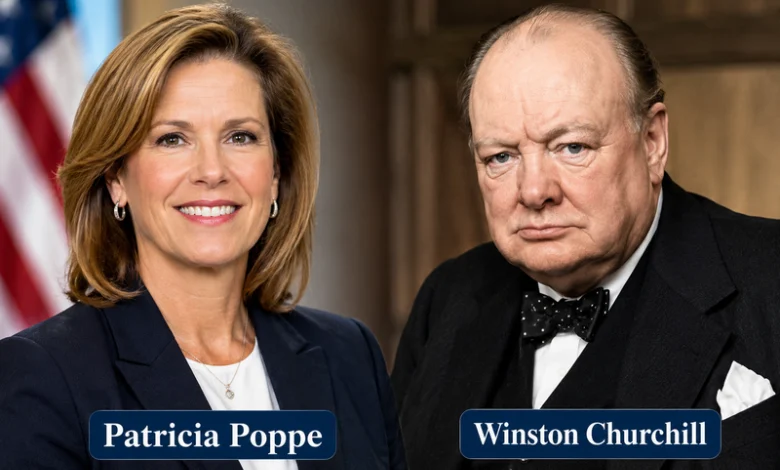
The names Patricia Poppe and Winston Churchill may seem unusual together because they belong to completely different professional worlds and historical periods. Patricia Poppe is an American business executive known for her leadership in the energy industry, while Winston Churchill was Britain’s prime minister during the Second World War and one of the most influential political figures of the twentieth century. However, their names raise an interesting question: is there any documented connection between them?
Based on available biographical and historical records, there is no verified evidence of a family relationship, personal association, or professional collaboration between these two individuals. Their backgrounds, careers, and achievements are entirely different. Nevertheless, examining their leadership experiences provides an opportunity to understand two distinct approaches to responsibility, decision-making, and public service.
This article explores their biographies, professional achievements, historical backgrounds, and possible similarities while separating documented facts from speculation.
Who Is Patricia Poppe?
Patricia K. Poppe, widely known as Patti Poppe, is an American business executive recognized for her work in the energy and utility industries. She has built her career through engineering, manufacturing, operational management, and corporate leadership.
She became the Chief Executive Officer of PG&E Corporation in January 2021. The company provides electricity and natural gas services to millions of customers across Northern and Central California.
Before joining PG&E, Poppe served as President and CEO of CMS Energy and its principal subsidiary, Consumers Energy. Her experience in the utility sector helped establish her reputation as an executive focused on operational improvements, customer service, workplace safety, and organizational performance.
Patricia Poppe’s Education and Early Career
Poppe developed her professional foundation through engineering education. She earned bachelor’s and master’s degrees in industrial engineering from Purdue University. She also completed a master’s degree in management at Stanford University’s Graduate School of Business.
Her early professional experience included management positions in the automotive industry at General Motors. She later worked at DTE Energy, where she served as a power plant director.
These positions provided valuable experience in manufacturing, engineering, and energy operations. Over time, she moved into senior management roles and developed expertise in managing large organizations.
Her Leadership at CMS Energy and PG&E
One important stage of Poppe’s career began when she joined CMS Energy. During her time with the Michigan-based company, she held several senior positions before becoming its President and CEO in 2016.
In January 2021, she moved to PG&E Corporation as its Chief Executive Officer.
Her responsibilities include overseeing major operational priorities, improving customer experiences, strengthening safety practices, and supporting the company’s long-term energy strategy.
According to PG&E’s official biography, her educational background and experience across different industries have contributed to her leadership approach.
Who Was Winston Churchill?
Winston Churchill was a British statesman, politician, military historian, and writer who played a major role in twentieth-century history. He is particularly remembered for leading Britain during the Second World War.
Born on November 30, 1874, at Blenheim Palace in Oxfordshire, England, Churchill came from an aristocratic family. His political career extended across several decades, during which he held numerous government positions.
His most historically significant achievement was becoming Prime Minister in 1940, when Britain faced the threat of Nazi Germany.
Churchill’s Political Career
Churchill entered Parliament in 1900 and gradually became an influential figure in British politics.
Throughout his career, he served in several important government positions, including First Lord of the Admiralty and Chancellor of the Exchequer.
However, his international reputation grew significantly after he became prime minister on May 10, 1940.
Britain was facing an extremely difficult military situation. Churchill became known for his determination to continue resisting Nazi Germany, even during periods when Britain’s future appeared uncertain.
His speeches helped communicate the government’s position and encouraged public determination during wartime.
His Achievements and Historical Legacy
Churchill remained an important political figure after the Second World War. Although his Conservative Party lost the 1945 general election, he returned to the position of prime minister in 1951 and served until 1955.
He also became internationally recognized as a writer. In 1953, he received the Nobel Prize in Literature for his historical and biographical writings, as well as his oratory.
Churchill died on January 24, 1965, in London.
His legacy continues to be studied in discussions about political leadership, wartime decision-making, communication, and British history.
Patricia Poppe and Winston Churchill: Is There a Real Connection?
The main question surrounding these two names is whether they share any documented personal, professional, or historical relationship.
Based on reliable public biographies and historical records, no direct connection has been established.
Their careers developed in entirely different environments. Poppe built her professional reputation through American engineering and energy companies, while Churchill dedicated much of his life to British politics, government, and international affairs.
There is also no reliable public documentation establishing that they met, worked together, or maintained a family relationship.
An important historical detail makes their professional timelines particularly clear: Churchill died in 1965, long before Poppe began her documented corporate leadership career.
Therefore, the available evidence supports treating them as two separate individuals rather than presenting them as people with an established relationship.
Key Facts About Both Individuals
The following table summarizes their backgrounds and major achievements using publicly documented information.
| Category | Patricia Poppe | Winston Churchill |
|---|---|---|
| Full name | Patricia K. Poppe | Winston Leonard Spencer Churchill |
| Nationality | American | British |
| Profession | Business executive | Politician and statesman |
| Known for | Energy industry leadership | Leadership during World War II |
| Major organization | PG&E Corporation | British Government |
| Leadership position | CEO of PG&E since 2021 | British Prime Minister |
| Education | Purdue University and Stanford University | Royal Military College, Sandhurst |
| Major recognition | Corporate and industry leadership | Nobel Prize in Literature, 1953 |
| Birth date | Not publicly confirmed in the cited official biography | November 30, 1874 |
| Death date | Not applicable | January 24, 1965 |
Leadership Styles: Similarities and Differences
Although these individuals worked in different fields, their careers provide an interesting opportunity to examine leadership from two perspectives.
Decision-Making Under Pressure
Churchill’s leadership became particularly important during the Second World War. He faced decisions involving military strategy, national security, international alliances, and the future of Britain.
His approach required political judgment and the ability to communicate difficult decisions during a national emergency.
Poppe’s responsibilities are different. As a corporate executive, she deals with operational performance, infrastructure, customer expectations, employee safety, and energy reliability.
Both positions involve significant responsibilities, but their decision-making environments should not be confused. Leading a country during a world war is fundamentally different from managing a modern energy corporation.
Communication and Public Responsibility
Communication played an important role in Churchill’s political leadership. His speeches helped explain Britain’s wartime position and communicate confidence during difficult circumstances.
Similarly, modern corporate executives must communicate organizational priorities to employees, customers, investors, regulators, and other stakeholders.
Poppe’s public responsibilities include explaining PG&E’s operational goals and addressing concerns involving energy services and customer trust.
The comparison demonstrates that effective communication matters in different leadership environments, even when the responsibilities and consequences are not comparable.
Different Historical and Professional Environments
Churchill worked in a period shaped by international conflict, political instability, and major changes in global power.
Poppe operates in a modern business environment influenced by technological development, energy transitions, environmental challenges, infrastructure requirements, and public expectations.
Their experiences reflect the different challenges faced by leaders in their respective periods.
Why Do People Search for These Two Names Together?
There are several possible explanations for searches involving these individuals.
First, search engines can display unusual combinations of names when people explore leadership comparisons, biographies, and historical topics.
Second, both individuals are associated with prominent leadership positions. This may encourage readers to investigate possible similarities in their professional approaches.
Third, online articles and search-related content sometimes combine unrelated public figures to explore questions about their backgrounds and achievements.
However, a shared search query does not establish a personal or historical relationship.
Readers should distinguish between an interesting comparison and a verified connection. Without reliable documentation, claims about family relationships, meetings, or professional collaborations should not be treated as facts.
Frequently Asked Questions
1. Are Patricia Poppe and Winston Churchill related?
There is no verified public evidence establishing a family relationship between Patricia Poppe and Winston Churchill. Their documented family backgrounds are different, and no reliable genealogical connection has been established.
2. Did Patricia Poppe ever work with Winston Churchill?
No. Churchill died in 1965, while Poppe’s documented professional career developed decades later. There is no evidence of any professional collaboration between them.
3. Who is Patricia Poppe?
Patricia Poppe, also known as Patti Poppe, is an American business executive. She became CEO of PG&E Corporation in January 2021 after previously leading CMS Energy and Consumers Energy.
4. What made Winston Churchill famous?
Churchill became internationally famous for leading Britain during the Second World War. His political leadership, wartime speeches, and determination to resist Nazi Germany established his historical reputation.
5. Did Winston Churchill receive a Nobel Prize?
Yes. Churchill received the Nobel Prize in Literature in 1953. The award recognized his historical and biographical writing and his contributions to public speaking.
6. What similarities do these two leaders share?
Both held influential leadership positions and faced important responsibilities. However, their professional environments were very different. Churchill led a country during wartime, while Poppe has focused on corporate management and energy operations.
Conclusion
The relationship between Patricia Poppe and Winston Churchill is best understood as a comparison between two influential leaders from different generations and professional backgrounds. There is no verified evidence of a family connection, personal relationship, or professional collaboration between them.
Poppe has established her reputation through engineering, corporate management, and leadership in the American energy industry. Churchill, meanwhile, remains an important historical figure because of his role in British politics and leadership during the Second World War.
Although their careers cannot be directly compared, examining their experiences highlights how leadership responsibilities change across industries and historical periods. Ultimately, their shared appearance in a search query does not establish a real-world connection, and the available evidence supports viewing them as two separate public figures.
Read Also: Gary Heminger and Kathy Warden: Is There a Connection

One Comment